150 Years of
Faith & Community
From a modest pro-cathedral on Farmington Avenue to the soaring contemporary landmark it is today, the Cathedral of Saint Joseph has stood at the heart of Catholic life in Connecticut since 1872.
The First Ninety Years, 1872–1962
Beginning Plans
The beginnings of the Cathedral of Saint Joseph coincide with the division of the Diocese of Hartford in 1872, when Providence, Rhode Island, became a separate diocese. Pope Pius VIII had established the Diocese of Hartford in 1843 and named Rev. William Tyler, the Vicar General of Boston, as its first bishop. Seeing how few Catholics (just 600) lived in Hartford, Bishop Tyler petitioned Rome to reside in Providence instead, where about a thousand Catholics were in residence. His unusual request was granted, and his successors continued that arrangement.
When Bishop McFarland finally moved to Hartford in 1872, he purchased the old Morgan estate on Farmington Avenue for $75,000 — ground for a cathedral, an Episcopal residence, and a motherhouse for the Sisters of Mercy. A convent was built first; its chapel served as the pro-Cathedral while the cathedral was under construction.
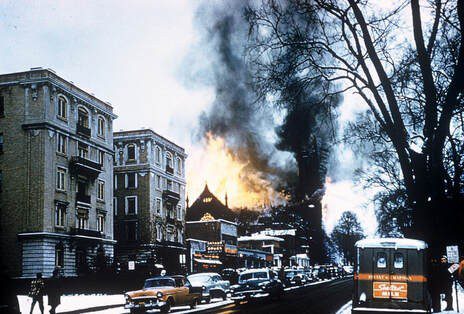
The blaze that destroyed the original Cathedral of Saint Joseph, Farmington Avenue, Hartford. Source: Archdiocesan Archives.
Groundbreaking & Consecration
Though Bishop McFarland dedicated the pro-Cathedral and planned the building, it was his successor, Bishop Thomas Galberry, O.S.A., who broke ground on August 30, 1876, and laid the first stone on September 13 of that year. A vast assembly of bishops, priests, and laity gathered for the laying of the cornerstone on Sunday, April 29, 1877.
Bishop Lawrence S. McMahon, consecrated on August 10, 1879, inherited not only an incomplete cathedral but a $60,000 debt — which he soon liquidated. Thirteen years later, on May 8, 1892, Bishop McMahon consecrated the Cathedral in the presence of an impressive array of dignitaries from across the northeastern United States and Canada.
Cornerstone ceremony, April 29, 1877. Source: Archdiocesan Archives.
The Fire of 1956
The cathedral remained substantially unchanged until 1938, when soil conditions endangered the foundation. A vast renovation under Bishop Maurice F. McAuliffe made the cathedral not only safe but more beautiful. Hundreds of piles were driven from the floor to ensure a proper foundation, and the work was completed in time for Christmas, 1939.
Seventeen years later, during morning Mass on December 31, 1956, worshipers smelled fire. Flames that could not be located until late morning suddenly shot up into the wooden ceiling. Windows shattered as by an explosion; the roof fell; and everything within suffered from uncontrolled fire. Before late afternoon, all that remained was a charred, smoldering, ice-encrusted ruin. Expert structural engineers having demonstrated that nothing could be salvaged, the walls were demolished, the site cleared, and the cornerstone moved to rest near the place where the new cathedral would stand.
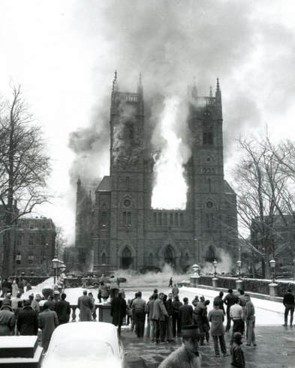
The aftermath of the Cathedral fire, January 1957. Source: Archdiocesan Archives.
The New Cathedral
A fund-raising campaign involving parishes and other donors was soon inaugurated. Archbishop Henry F. O’Brien engaged Eggers and Higgins of New York as architects of the new cathedral. In August 1957, they submitted several designs; in December, a contemporary design with a flavoring of the traditional was announced.
Archbishop O’Brien presided over the formal groundbreaking on September 8, 1958. During the 1957–1959 period of construction, Cathedral parishioners attended Sunday Mass in the auditorium of the Aetna Life Insurance Company building, directly opposite the Cathedral site. The lower church was blessed on December 24, 1960, and at midnight Archbishop O’Brien offered the first Pontifical Mass there. Finally, on May 15, 1962, the completed edifice was consecrated.
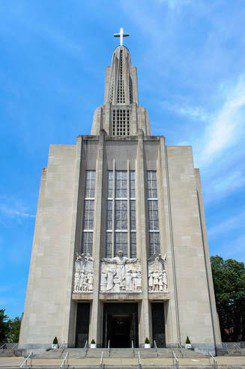
The new Cathedral, consecrated May 15, 1962. Source: Archdiocesan Archives.
Key Moments in Our History
Built to Inspire
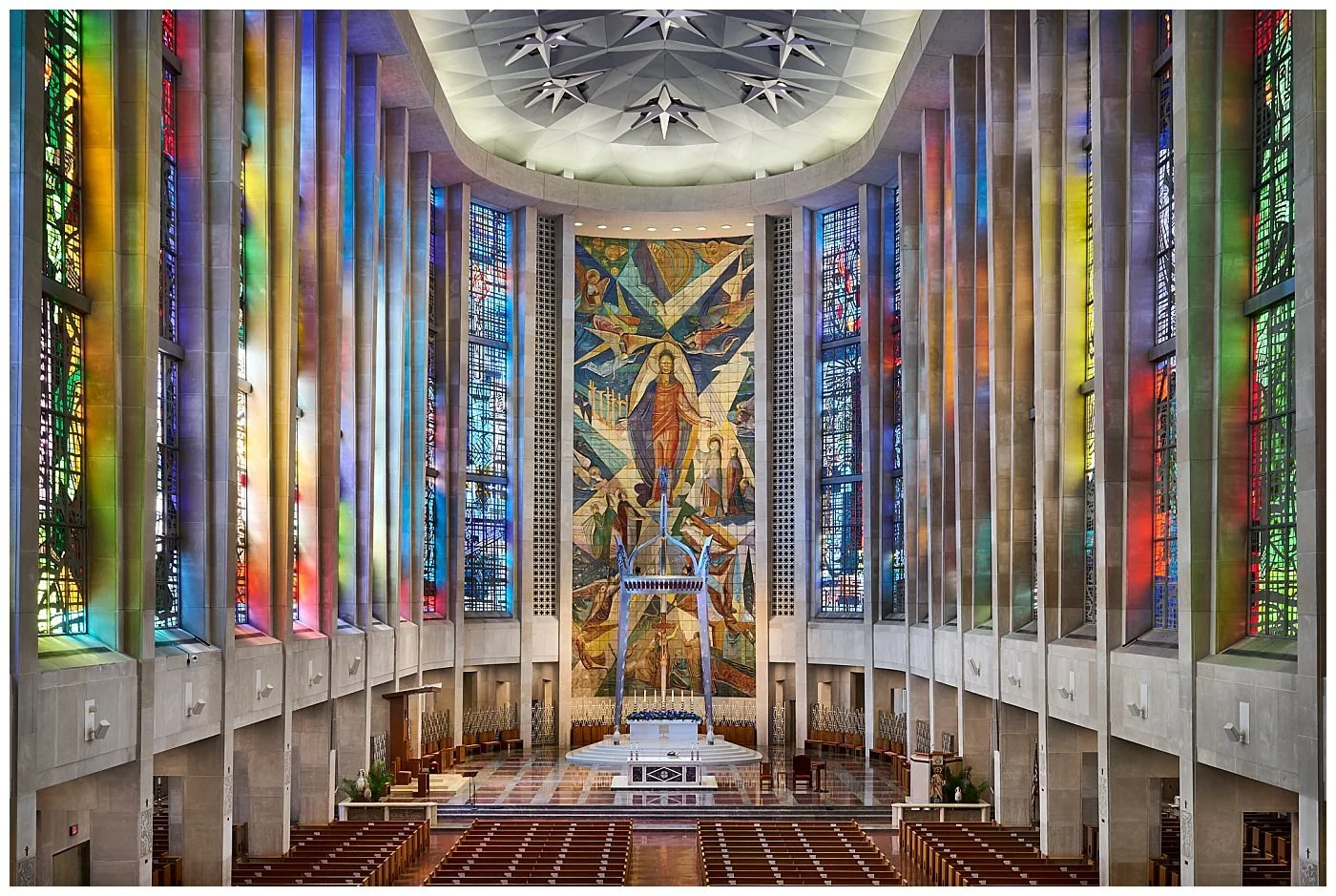
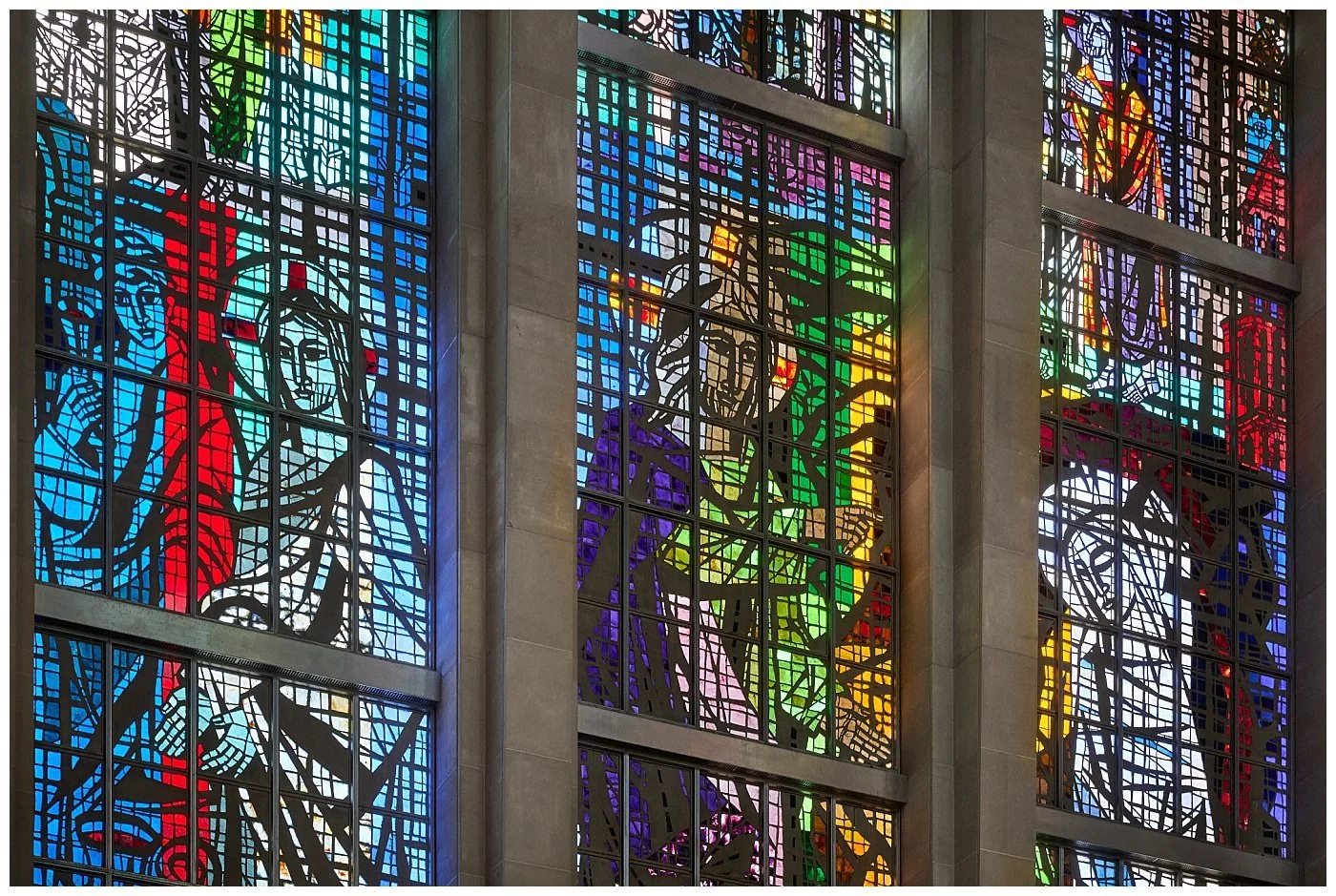
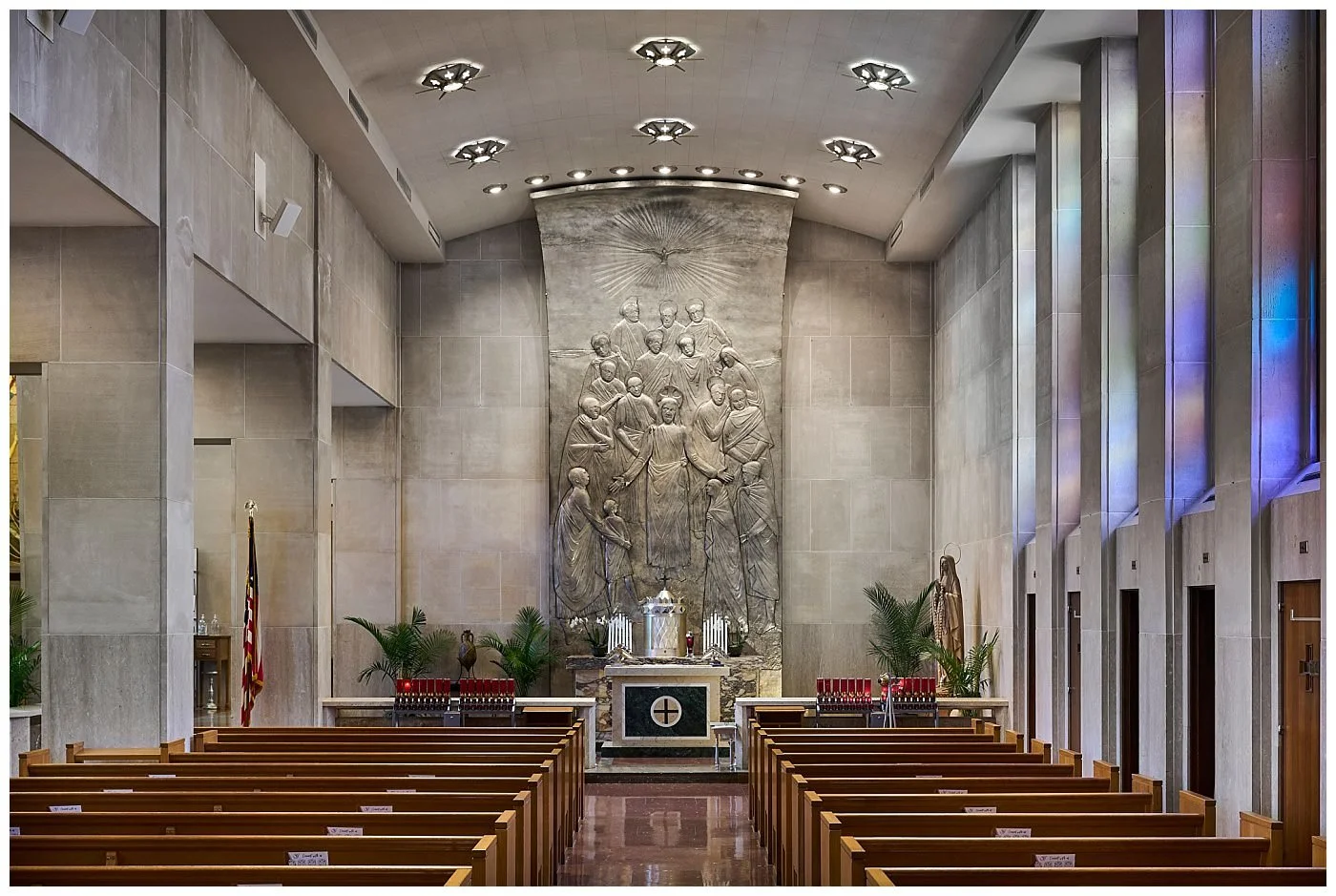
Cathedral Photography courtesy of Florian Marschoun | Aspect Six: www.aspectsix.com
Patrick C. Keely & the Original Design
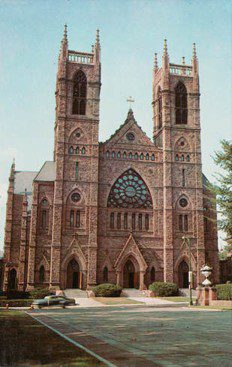
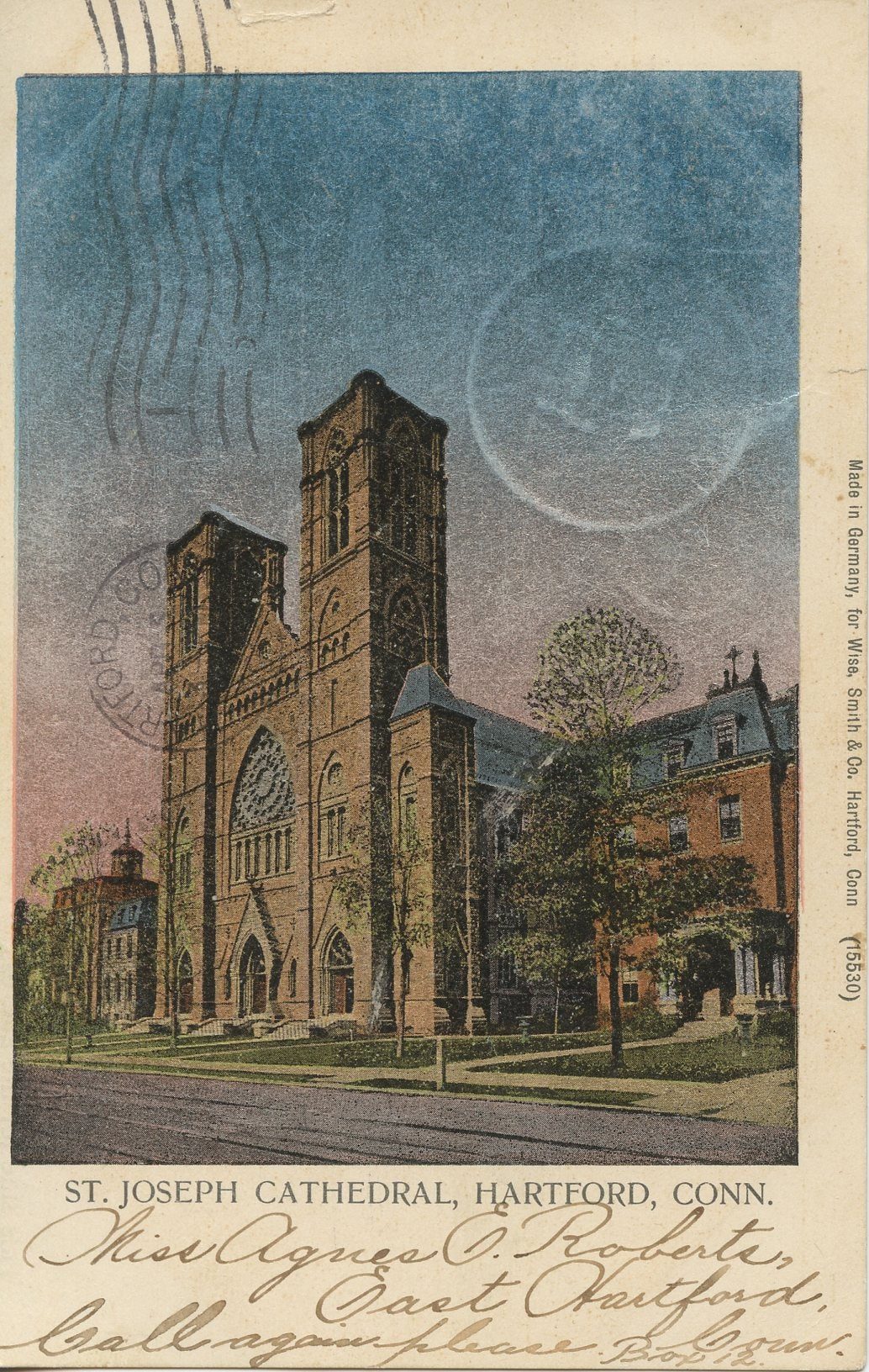
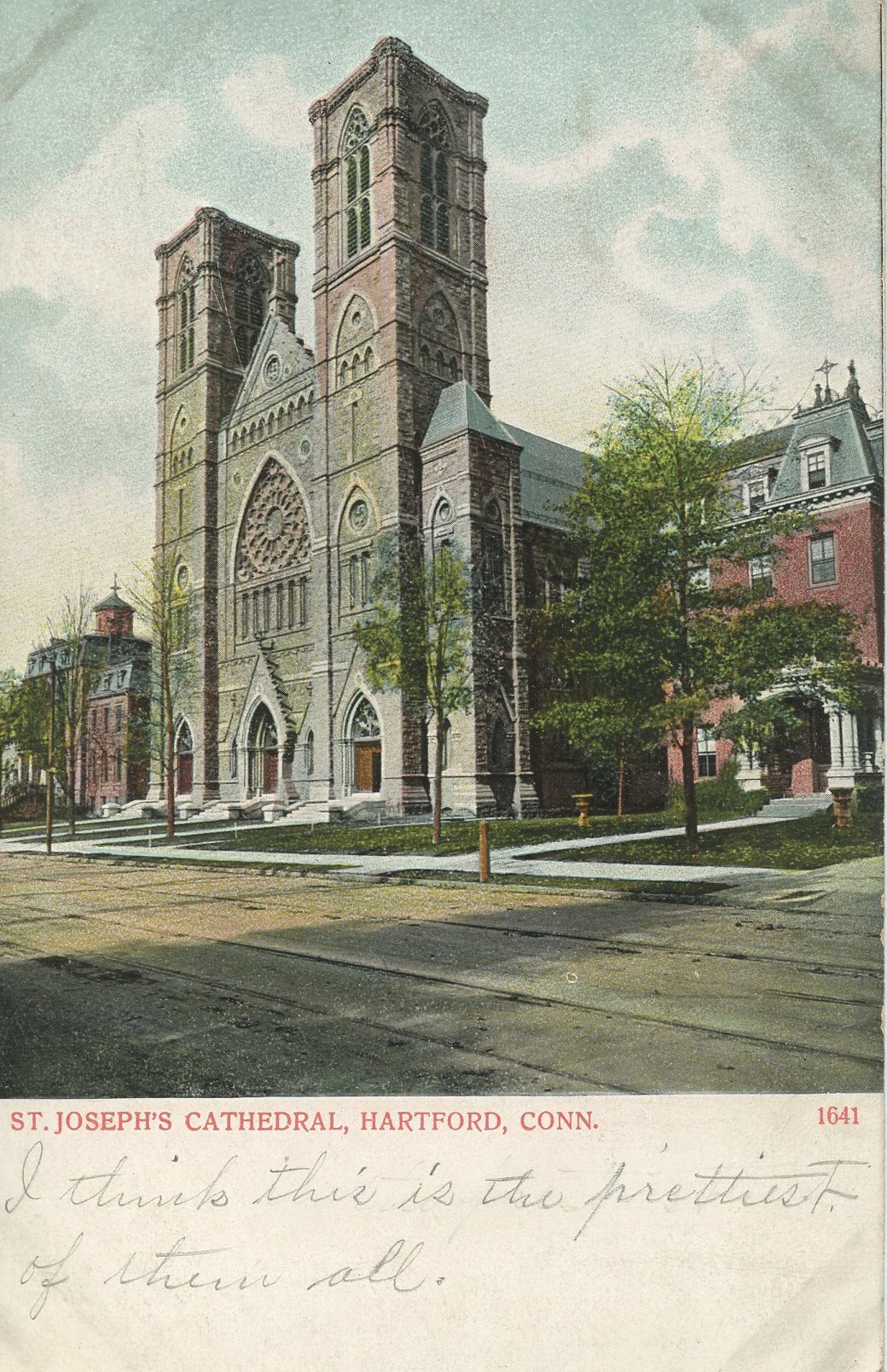
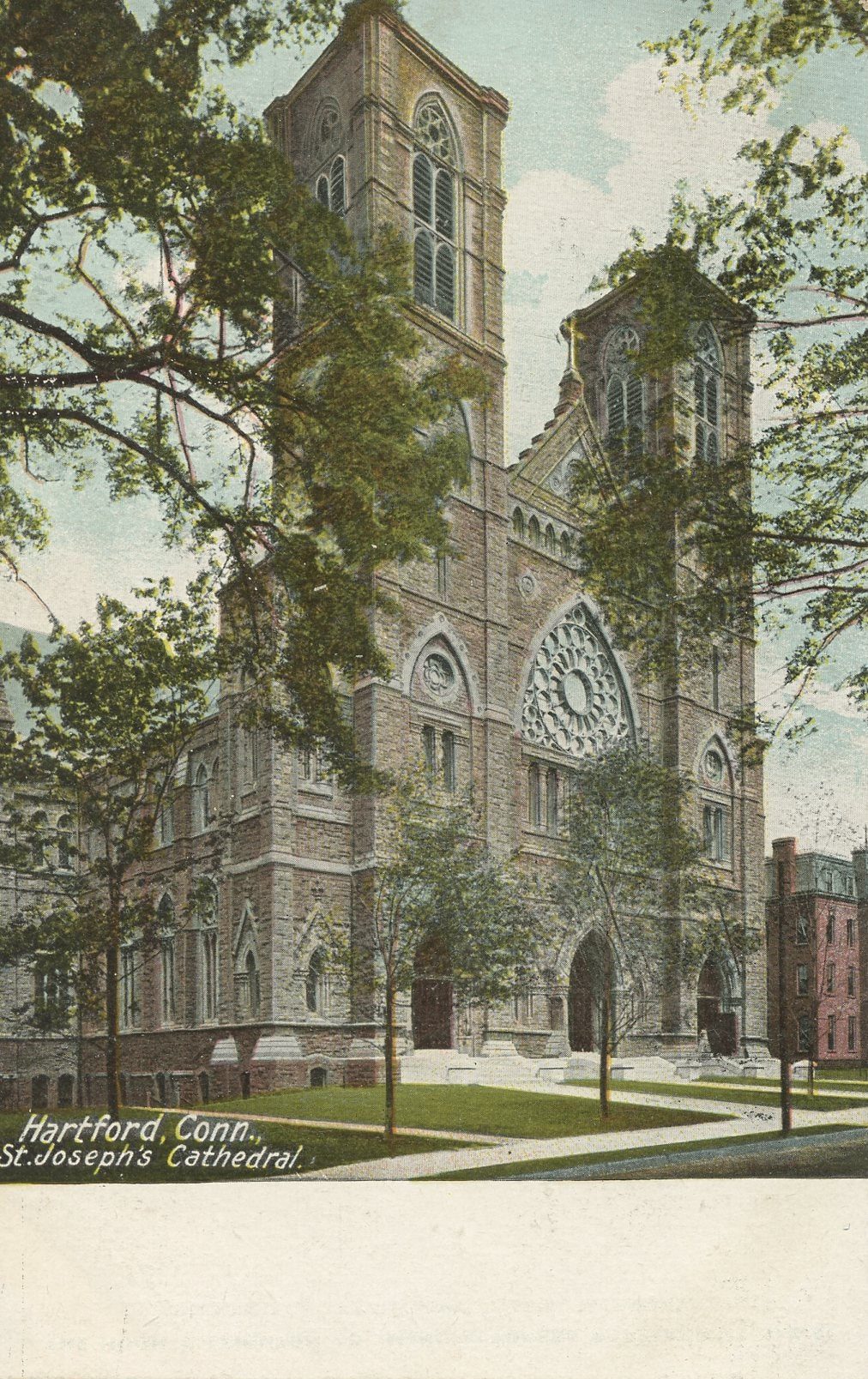
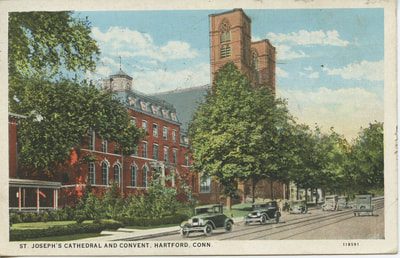
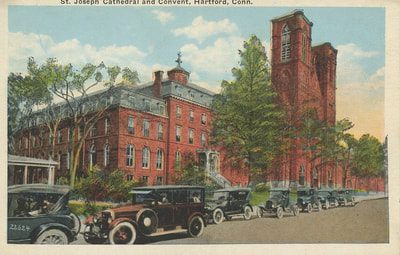
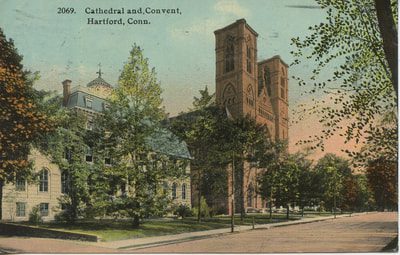
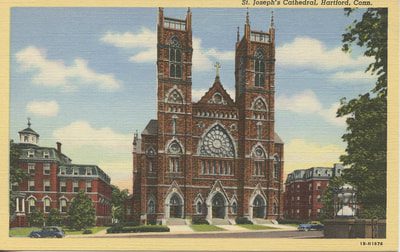
The renowned Patrick C. Keely was the architect who planned the original Cathedral — cruciform in shape and early Gothic in design. Approached by well-laid walks, the cathedral had three double doorways leading to a tiled vestibule. Its exterior was of Portland rough brown stone with stone ornamentation, and its square towers, surrounded by low battlements, recalled those of Notre Dame in Montreal.
It was generally believed to be one of the finest achievements of Keely’s prolific career. Following the fire of 1956, the commission for the new Cathedral was given to Eggers and Higgins of New York, who delivered a contemporary design with traditional sensibility, consecrated in 1962.
Original Cathedral — Building Details
Current Cathedral — Building Details
Archival Documents
The artifacts below are part of an ongoing effort to digitally preserve and make publicly available historical content from Archdiocesan archives relating to the Cathedral of Saint Joseph. Documents hosted by Scribd can be expanded by clicking the four-arrows icon in the bottom-right of each document window.
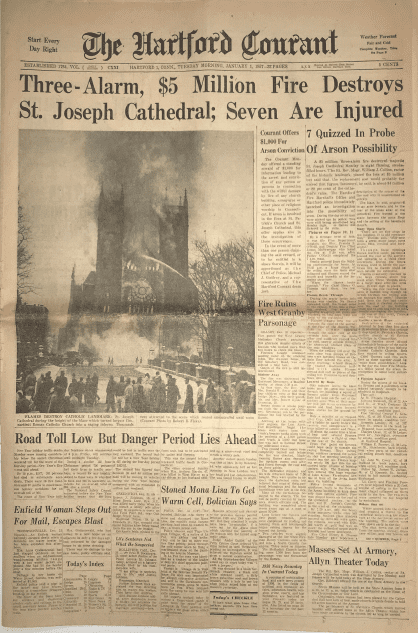
Front page and related coverage of the original Cathedral’s destruction.
View Document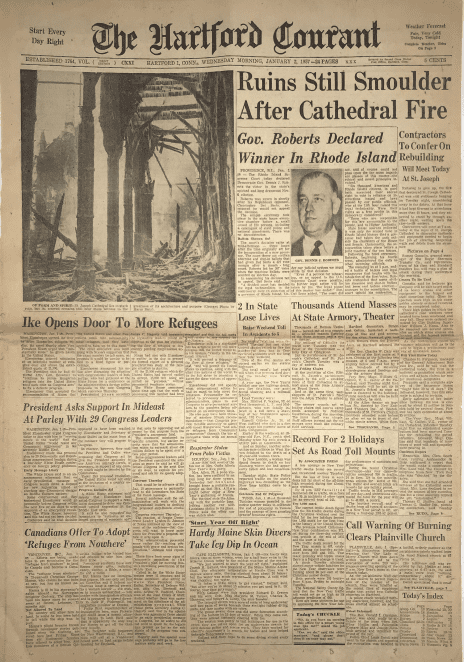
Continued front page and related coverage of the original Cathedral’s destruction.
View Document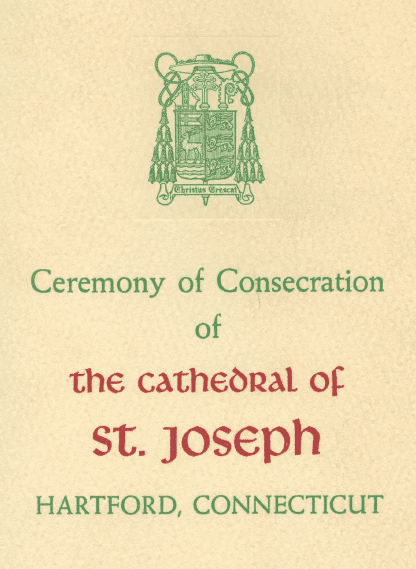
The original program distributed at the Cathedral’s consecration ceremony.
View Document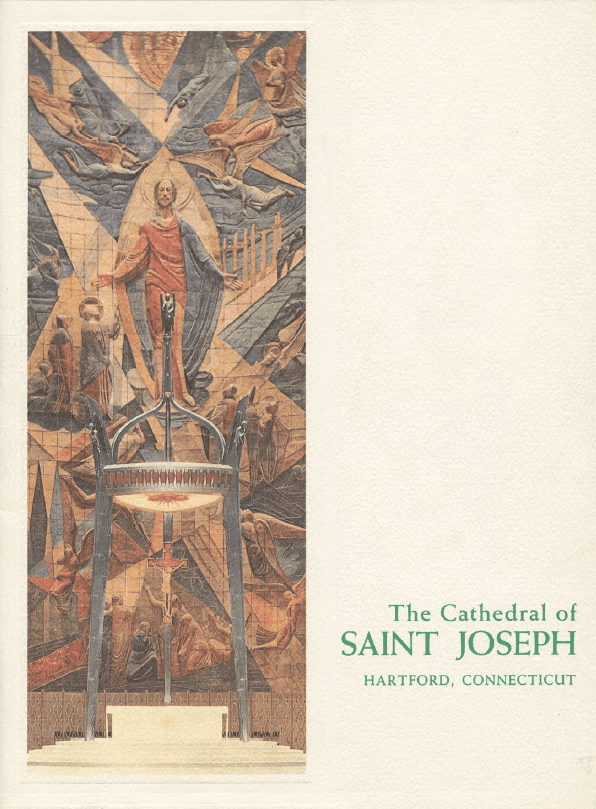
Distributed upon the Cathedral’s opening — considered the most definitive and thorough resource on the Cathedral ever printed.
View Document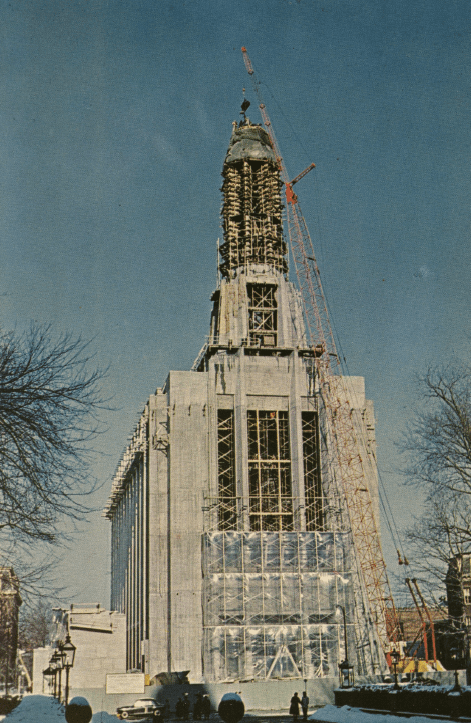
The original informational kit provided to media upon the Cathedral’s opening.
View Document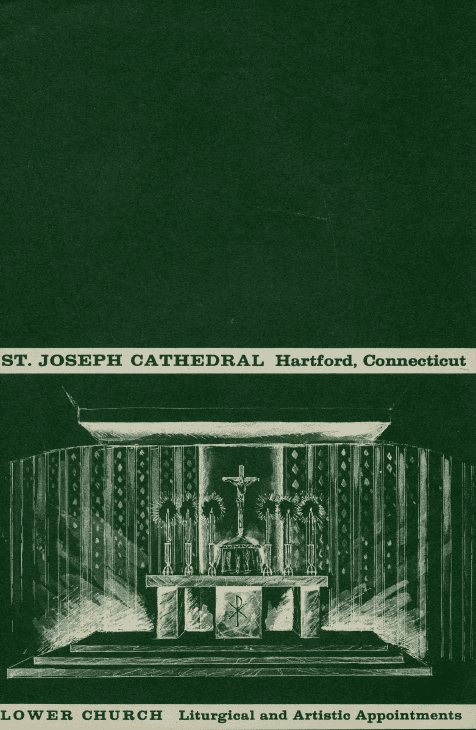
An early brochure detailing the artistic and liturgical appointments to the lower church.
View Document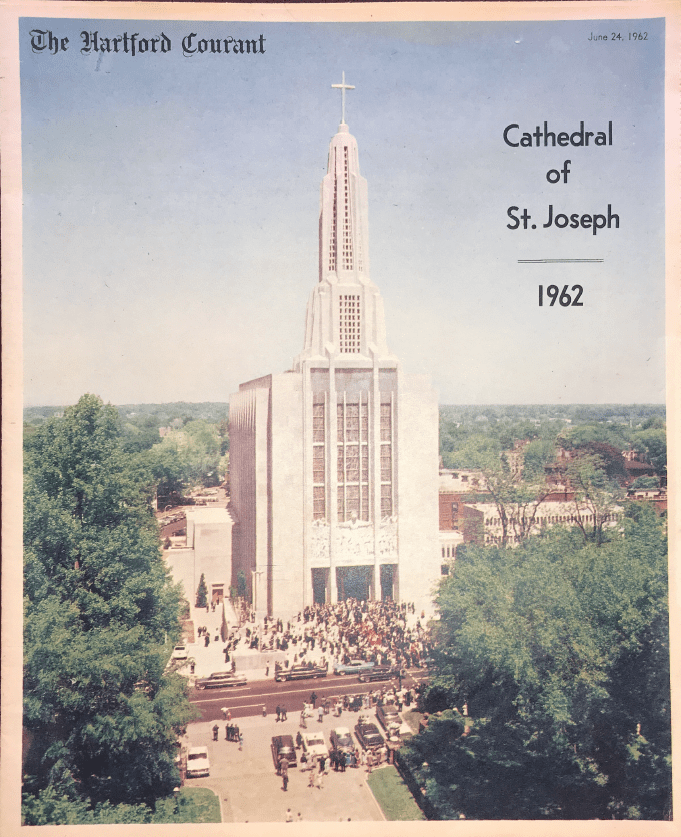
A 20-page full-color magazine insert — a fine introduction to the Cathedral’s splendor for those who had not yet seen it in person.
View Document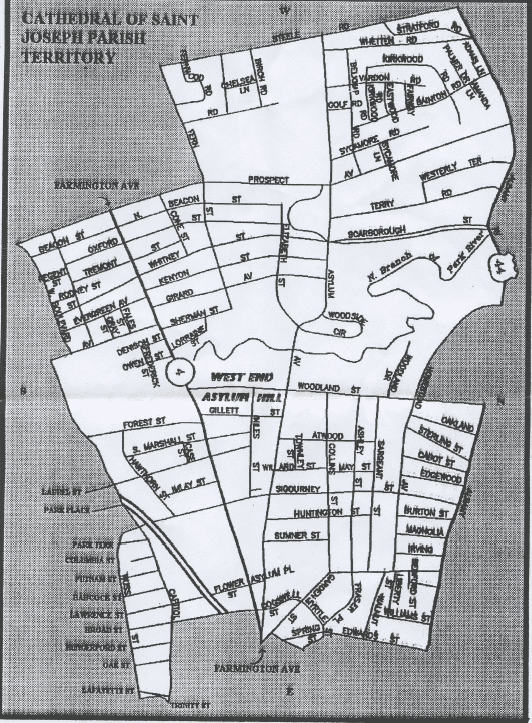
Written and visual outlines of the geographic boundaries encompassed by the Cathedral parish.
View Document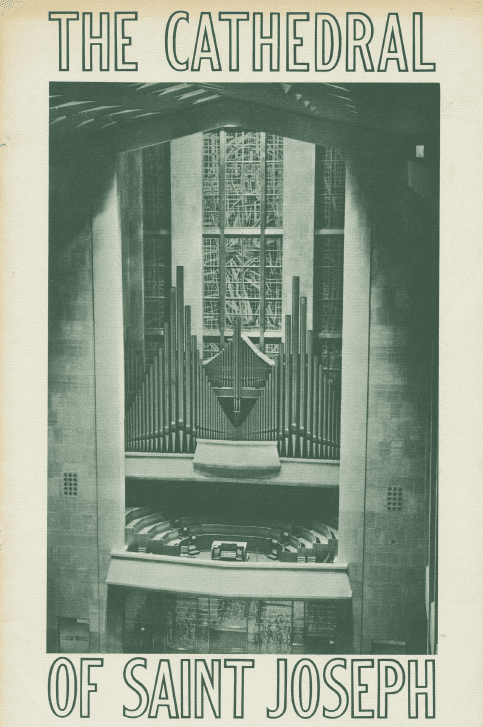
Program from a special Mass featuring the dedication of the Cathedral organ, built by Austin Organs Inc. of Hartford, CT.
View Document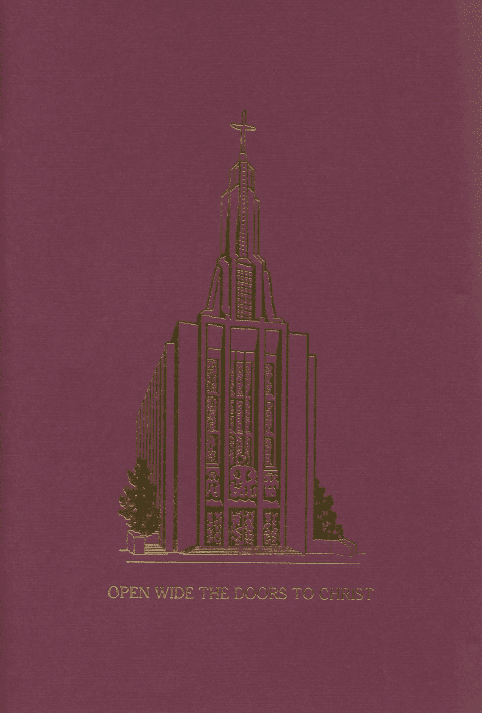
Program from the Mass for the blessing of the Holy Door, presided over by Apostolic Nuncio Archbishop Gabriel Montalvo. The Holy Year door served as a focus for prayer during the Jubilee Year of 2000.
View DocumentGlimpses of the Past
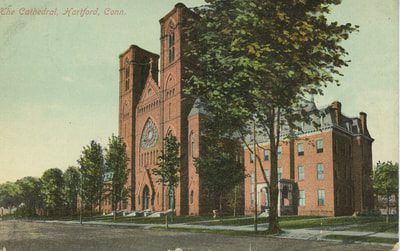
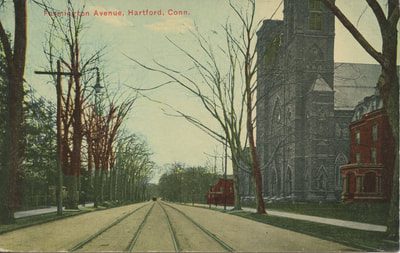
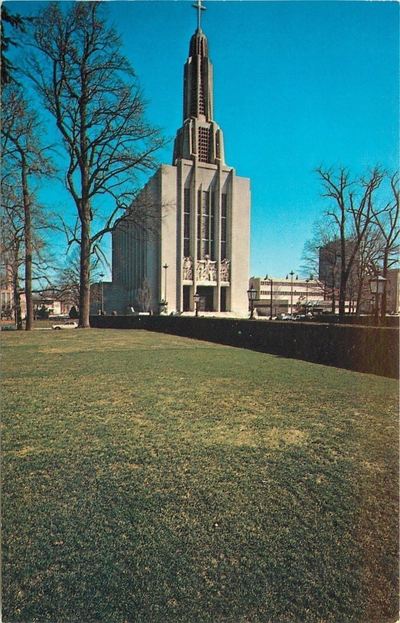
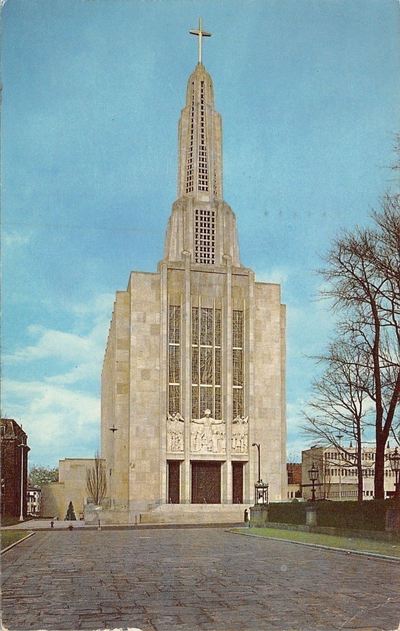
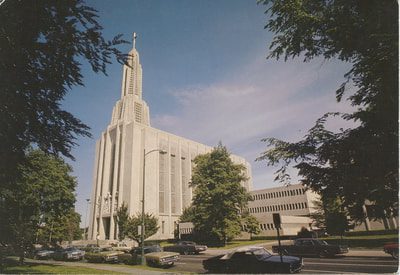
These postcards, dated 1908 to the early 1970s, offer fascinating glimpses into the Cathedral’s past. Hover over each to reveal details, and click to enlarge.
Watch & Explore
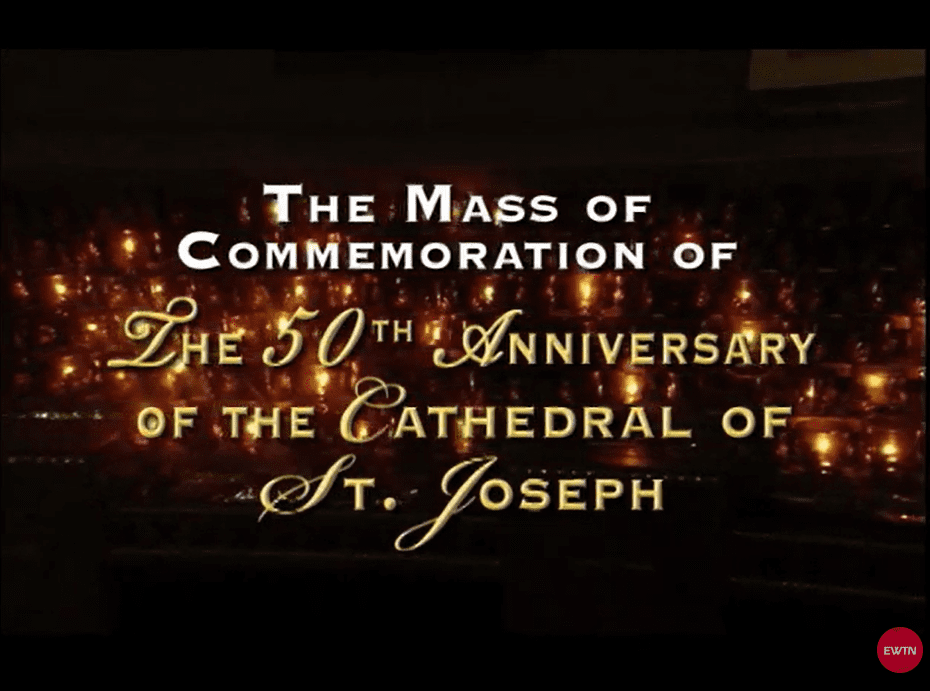
Mass of Commemoration of the 50th Anniversary of the Cathedral of Saint Joseph — May 20, 2012. Opens on YouTube.
50th Anniversary Mass
Watch the complete Mass of Commemoration of the 50th Anniversary of the Cathedral of Saint Joseph, celebrated on May 20, 2012.
“The Anniversary Mass will be a blessed way to celebrate the peace and communion of our people from across the entire Archdiocese. The beauty of the Cathedral raises our hearts and minds in continuing praise and thanksgiving to Almighty God.”
Original Cathedral Website
Explore the first Cathedral of Saint Joseph website as it appeared on February 5, 2003 — an artifact of early web design and a unique piece of Cathedral history, preserved via the Wayback Machine.
Explore the ArchiveArchdiocese of Hartford
The Cathedral of Saint Joseph is the mother church of the Archdiocese of Hartford. Visit the Archdiocesan website to learn more about its history and mission.
Visit Archdiocese of Hartford